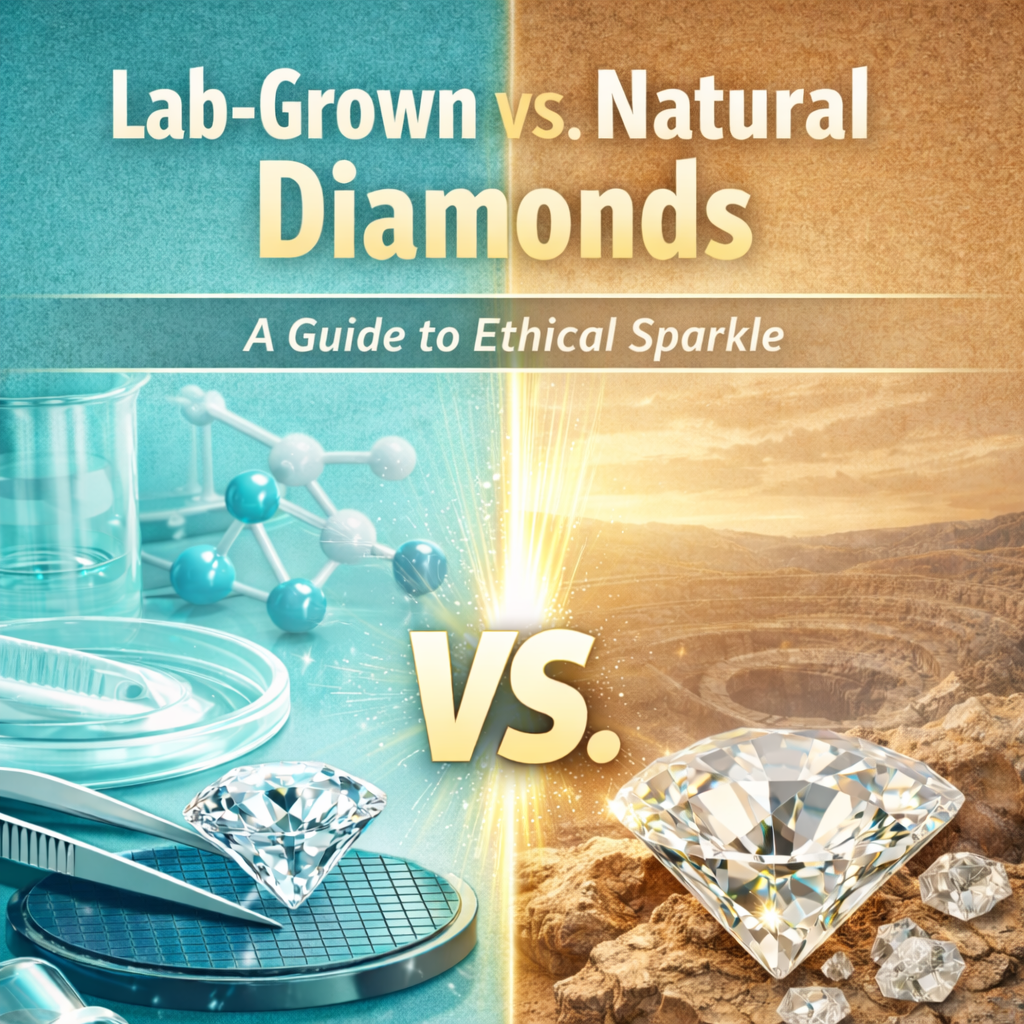
Diamonds have long been the ultimate symbol of love, endurance, and luxury. However, in recent years, a new contender has emerged in the jewelry world, sparking a significant debate: Lab-grown diamonds vs. natural diamonds. If you are looking for the perfect engagement ring or a timeless piece of jewelry, understanding the nuances of “ethical sparkle” is essential. In this guide, we will break down the differences in origin, cost, and environmental impact to help you make an informed and conscious choice.
💎 What is the aDifference? (Beyond the Surface)
The most important thing to know is that lab-grown diamonds are real diamonds. They are not cubic zirconia or moissanite. Physically, chemically, and optically, they are identical to diamonds mined from the earth.
- Natural Diamonds: Formed over billions of years under intense heat and pressure deep within the Earth’s mantle.
- Lab-Grown Diamonds: Created in controlled laboratory environments using advanced technological processes like CVD (Chemical Vapor Deposition) or HPHT (High Pressure High Temperature) that mimic the natural growing process.
Even a professional gemologist cannot tell the difference with the naked eye; it requires specialized equipment to detect the growth patterns.
💎 The Ethical Shift: Sustainability and Sourcing
For many modern couples, the “Ethical Sparkle” refers to the peace of mind that comes with knowing where their diamond originated.
Environmental Impact
Natural diamond mining involves significant land excavation and water usage. While many mining companies now adhere to strict environmental regulations, the physical footprint remains large. Lab-grown diamonds, on the other hand, eliminate the need for mining, making them a popular choice for those seeking an eco-friendly jewelry alternative.
Human Rights and Traceability
The “conflict diamond” era led to the creation of the Kimberley Process, which ensures natural diamonds are sourced ethically. However, lab-grown diamonds offer 100% traceability. Because they are produced in a lab, there is no risk of association with conflict zones or unethical labour practices.
💎 Price vs. Value: Maximizing Your Budget
One of the most compelling reasons to choose a lab-grown diamond is the price tag. Generally, lab-grown diamonds cost 40% to 70% less than natural diamonds of the same quality.
| Feature | Natural Diamond | Lab-Grown Diamond |
| Rarity | Finite resource, rare | Produced on demand |
| Cost | Premium pricing | Budget-friendly / More carats for less |
| Resale Value | Historically retains value better | Lower resale market value |
| Certification | GIA / IGI Certified | GIA / IGI Certified |
By opting for a lab-grown stone, you can often afford a higher color and clarity grade or a larger carat size while staying within your original budget.
💎 Which One is Right for You? 💎
Choosing between lab-grown and natural diamonds is a deeply personal decision.
- Choose Natural if: You value the “miracle of nature,” the rarity of a billion-year-old stone, and you view your purchase as a long-term financial investment.
- Choose Lab-Grown if: You prioritize sustainability, ethical transparency, and want to maximize the visual impact and brilliance of your jewelry for a more accessible price.
Conclusion: A Future of Conscious Luxury
Whether it was forged in the stars billions of years ago or crafted with precision in a modern lab, a diamond’s beauty lies in the meaning you give it. Both options offer a stunning, permanent sparkle that will last a lifetime.
As you explore your options, look for GIA or IGI certifications to ensure that your choice—whichever it may be—meets the highest standards of quality and integrity.
Written by: Idil Gonen